
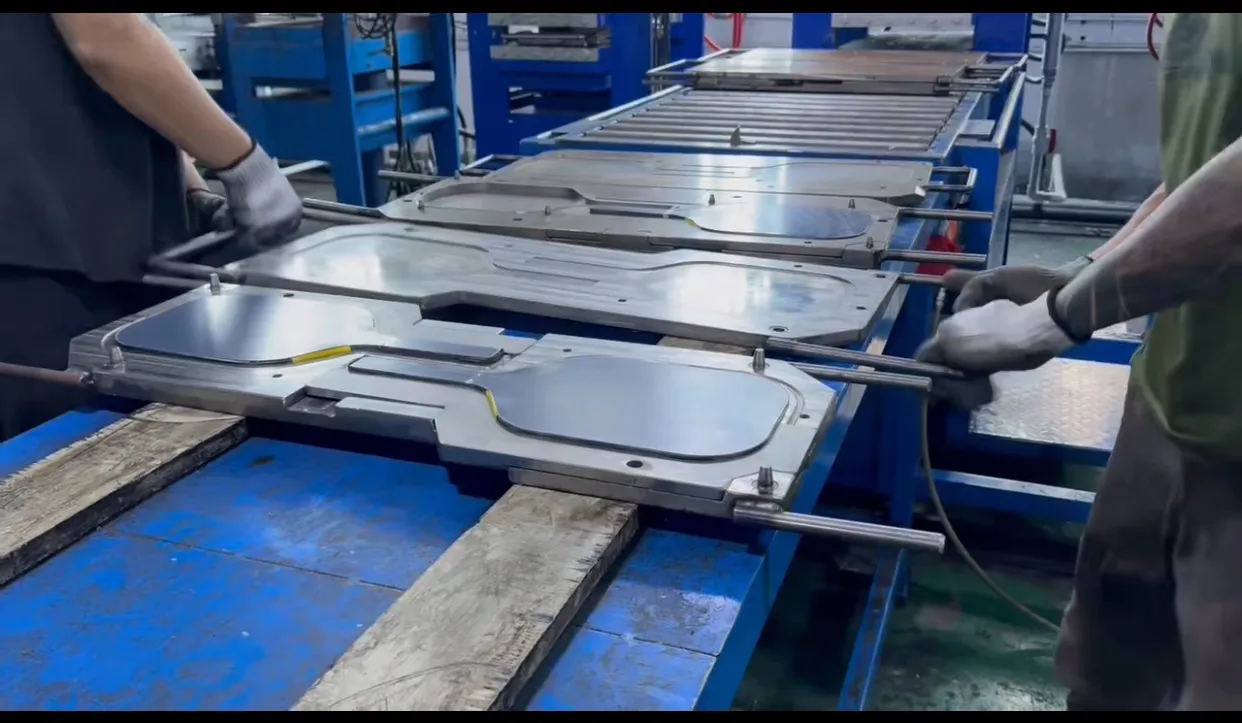
Have you ever wondered how a pickleball paddle is made?
Behind every paddle is a carefully controlled manufacturing process that combines advanced materials, precision engineering, and strict quality inspection. From carbon fiber sheets to the finished product, each step plays an important role in performance and durability.
Here's a look inside a modern pickleball paddle factory.
1. Raw Material Preparation
Production begins with selecting high-quality materials, including:
- Carbon fiber or fiberglass face materials
- Polypropylene honeycomb cores
- EPP or MPP foam cores
- Edgeguard materials
- Handle and grip components
The quality of these materials directly affects the paddle's strength, feel, and consistency.
2. Core Cutting and Assembly
The paddle core is cut to the required shape and thickness using precision equipment.
Depending on the design, manufacturers may use:
- Honeycomb core construction
- Foam core construction
- Hybrid core systems
The core is then assembled with the face materials to create the paddle structure.
3. Hot Pressing and Forming
The assembled materials are placed into molds and processed under high temperature and pressure.
This stage:
- Bonds all layers together
- Creates the paddle shape
- Improves structural strength
- Ensures consistency across production batches
For thermoformed paddles, this step is particularly important for overall performance.
4. CNC Machining and Finishing
After molding, the paddle is trimmed and refined.
Key processes include:
- Edge trimming
- Surface finishing
- Handle shaping
- Dimensional inspection
Precision machining helps ensure every paddle meets design specifications.
5. Graphic Printing and Branding
Custom designs are applied using advanced printing techniques.
Brands can customize:
- Paddle graphics
- Logos
- Colors
- Surface patterns
- Packaging artwork
This is where a paddle's unique appearance comes to life.
6. Edgeguard and Grip Installation
The paddle is completed with additional components such as:
- Edgeguards
- Grip wraps
- End caps
- Custom accessories
Proper installation improves durability and playing comfort.
7. Quality Inspection and Testing
Before shipment, every production batch undergoes quality control checks.
Common inspections include:
- Weight verification
- Dimension checks
- Surface quality inspection
- Bonding strength testing
- Balance consistency checks
Professional quality control helps ensure reliable performance and customer satisfaction.
8. Packaging and Shipment
After passing inspection, paddles are packaged according to customer requirements.
Options may include:
- Retail packaging
- Private label packaging
- Custom branded cartons
- OEM & ODM packaging solutions
The finished products are then prepared for international shipment.
Final Thoughts
Manufacturing a high-quality pickleball paddle involves far more than simply combining materials. From raw material selection and core construction to printing, assembly, and quality inspection, every step contributes to the final product's performance and durability.
Understanding the production process helps brands, distributors, and players appreciate the craftsmanship behind modern pickleball paddles.
At Winnex, we combine advanced manufacturing technology, strict quality control, and OEM & ODM expertise to produce high-performance pickleball paddles for brands worldwide.